The Edge of the Abyss Night 2
Dots, Lines, and Zigzags: Solos and Duos
August 29th, 2026 at 8:00 pm
Program:
Aus den Visionen der Hildegard von Bingen (From the Visions of Hildegard von Bingen) (1994) for alto solo
Detto I: Sonata for Organ and Percussion (1978)
Dots, Lines, and Zigzags (1976) - for bass clarinet and piano
INTERMISSION
Sonatina (1978) for solo flute
Chaconne (1962) for solo piano
In croce (1991) for organ and cello
All works by Sofia Gubaidulina
Performed by the InfraSound Ensemble:
Luke Paulino, alto
Yoshi Weinberg, flute
Kathryn Vetter, bass clarinet
Elizabeth Kate Hall-Keough, cello
Austin Philemon, organ
Daniel Schreiner, piano
J Clancy, percussion
Program Notes
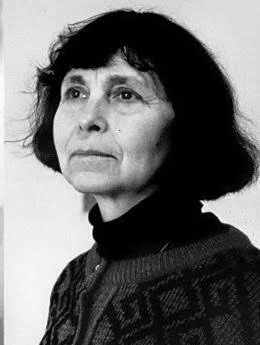
Sofia Asgatovna Gubaidulina was born in Chistopol during Stalin’s reign and graduated from the Kazan Conservatory in 1954, one year after Khrushchev assumed power. In 1959, partway through her continued studies of composition and piano at the Moscow Conservatory, she met Dmitri Shostakovich and played for him the symphony she had recently written as her final examination. Empathizing with the challenges posed by subverting the strict parameters of the Soviet-approved realism style, Shostakovich praised the young composer’s work and told her to “continue along your mistaken path.” Following his advice expectedly worsened the shadow of the Soviet authorities, which escalated dramatically after the end of Khrushchev’s Thaw in 1964. In 1979, the Union of Soviet Composers blacklisted her as one of the Khrennikov Seven for writing “noisy mud instead of musical innovation, unconnected with real life.” However, Gubaidulina took the denunciation in stride, enduring the poverty that arose from the subsequent lack of paying commissions in order to take advantage of the creative liberty it afforded her.
Gubaidulina’s Russian Orthodox faith pervades her work, but she qualifies her intentions: “I understand ‘religion’ in the literal meaning of the word, as ‘re-ligio’, that is to say the restoration of connections, the restoration of the ‘legato’ of life. There is no more serious task for music than this." The motif of simultaneous, bidirectional glissandi in two instruments often appears in her work, forming a sonic symbol of the cross with their opposing trajectories. As in Garden of Joys and Sorrows, the composer often employs unconventional techniques alongside spiritual themes to bolster the restoration of connections which she seeks. Many of these tendencies were inspired by experimentation in the mid-1970s with Astreia, her improvisatory folk ensemble.
Despite the best efforts of the Soviets, Gubaidulina has enjoyed a prominent and celebrated career. She garnered international attention through her violin concerto, Offertorium (1980) which was championed by Gidon Kremer. Her work Light of the End (2003) was given the honored program slot before Beethoven’s Ninth Symphony at the BBC Proms. Anne-Sophie Mutter and the London Symphony Orchestra recorded her second violin concerto In Tempus Praesens (2007) under Valery Gergiev. Her 80th birthday in 2011 was commemorated by many organizations worldwide, including a series of three weeklong Gubaidulina Festivals in Kasan, Hanover, and Moscow. During the festivities, the composer premiered her Percussion Concerto; her revised Bayan Concerto; A Pilgrimage of Four for violin, piano, bass, and percussion; and a work for twelve solo celli, Labyrinth.
–Josh Davidoff
In 1973, Sofia Gubaidulina was attacked and strangled in the elevator of her apartment building in Moscow. Luckily, she escaped by yelling “Why is it taking you so long to kill me?” and scaring her attacker. Her friends later theorized the attacker was a KGB agent. Following the fall of the USSR, she lived in Appen, Germany, from 1992. The Steinway grand piano in her home was a gift from Rostropovich. She married three times; her second husband was writer and dissident Nikolai Bokov. Gubaidulina briefly stopped composing in 2012 after the deaths of her third husband Pyotr Meshchaninov, her daughter, and her friend and fellow composer Viktor Suslin.
Sofia Asgatovna Gubaidulina passed away peacefully in her home on March 13th, 2025 in Appen, Germany at the age of 93.
InfraSound has always represented the voices of the marginalized, especially in the face of oppression and censorship. Although Gubaidulina saw music as an escape from the socio-political atmosphere of Soviet Russia, we view Sofia’s work as a vital representation of music as protest and as resistance. She associated music with human transcendence and mystical spiritualism which manifests itself as a longing inside the human soul to locate its true being, a longing she continually tried to capture in her works. Her ability to survive and create despite her circumstances are signals of the necessity of art as a form of survival under oppression. We perform these concerts in her honor.
–Yoshi Weinberg, Artistic Director of InfraSound
Aus den Visionen der Hildegard von Bingen (1994)
On the occasion of Alfred Schnittke's 60th birthday on 24 November 1994, Sofia Gubaidulina composed the vocal work From the Visions of Hildegard von Bingen for alto solo, which she dedicated to her friend and seriously ill composer colleague. With the opening words ‘God, who called everything into existence through his will, created it ...’, Gubaidulina not only emphasises her feelings in the face of her friend's difficult fate, but also formulates her own life in a figurative sense.
Text (translated by Beth Willer):
Gott, der alles durch Seinen Willen ins Dasein rief, hat es erschaffen, damit Sein Name erkannt und verehrt werde. Nicht nur das Sichtbare und Vergängliche tut Er damit kund sondern offenbart darin auch das Unsichtbare und Ewige. Darauf weist das Gesicht hin, das du schaust
God, who by His will, called everything into existence; He has created it, so that His name will be known and revered. Not only does He make the visible and impermanent known, but he also reveals the invisible and eternal. You [God] have shown this vision to me.
Detto I: Sonata for Organ and Percussion (1978)
Detto I is a one-movement work consisting of three broad periods in which static lines are gradually layered on top of each other and finally brought to a solution, as it were.
Each of these periods is in turn in three parts and can be interpreted as a non-traditional sonata form, in which the idea of horizontal lines adding up forms the main movement, while vertical, chordal triads represent the secondary movement. The final section brings about the ‘resolution’ of these contrasts with the help of sonorous glissando clusters in the organ or tremolo bell clusters.
Contrasting movement types (linear - chordal - glissando) thus take the place of the thematic contrast that characterises the traditional sonata form.
–Sofia Gubaidulina
Punkte, Linien, und Zickzack (Dots, Lines, and Zigzags) (1976)
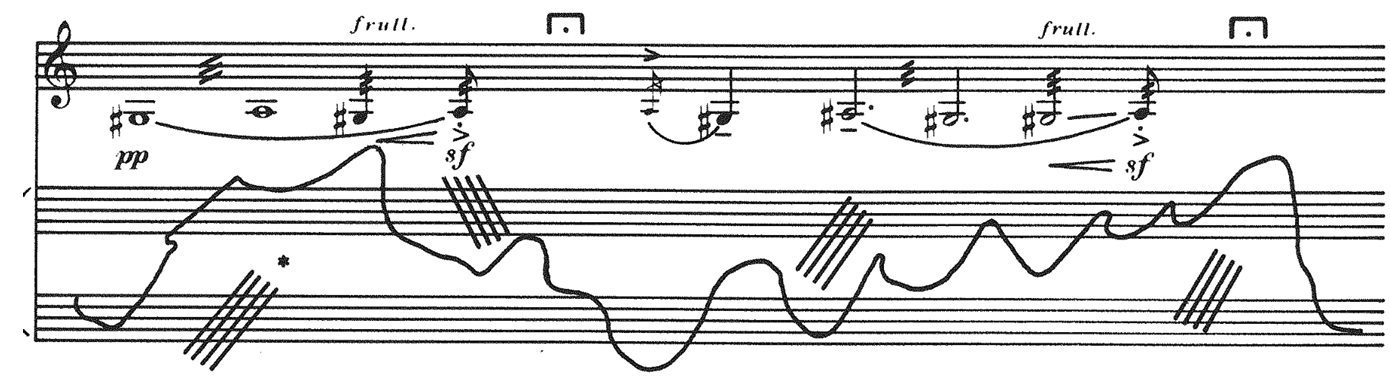
Punkte, Linien, und Zickzack (Dots, Lines, and Zigzags) is a highly improvisatory and playful “duet” for bass clarinet and piano. Calling the piece a “duet” is a bit deceitful, as the first seven or so minutes the solo bass clarinetist performs an improvisatory cadenza while sitting at the piano with the sustain pedal depressed, thus creating sympathetic reverberations from the undamped piano strings. Gubaidulina utilizes the full expanded range of the bass clarinet, and mixes graphic with standard notation with various “dots, lines, and zigzags.” The pianist is asked to play inside the piano with various brushes, improvising off the graphic notation until the very end when they replace the bass clarinetist at the piano bench and perform a short cadenza like piano figure.
–Yoshi Weinberg
Sonatina (1978) for solo flute
In Gubaidulina’s compositions, the flute often serves as more than just an instrument – it becomes a voice, an entity that breathes, sighs, and speaks with human-like expressivity. Scholars have noted that her approach to flute writing is deeply connected to vocal articulation, evoking the nuances of the human voice. This is particularly evident in her Sonatina for Solo Flute (1978), where she employs speech-like rhythms, expressive inflections, and melodic gestures borrowed from both Baroque and Romantic traditions.
The Sonatina, while relatively short, is a striking example of her ability to create an intimate monologue between the performer and the audience. Gubaidulina’s use of recitative-like phrases, dynamic contrasts, and intricate articulation transforms the flute into a storyteller, weaving an emotional and deeply introspective narrative. This work avoids the virtuosic brilliance often associated with Romantic flute music, instead embracing a more measured, expressive approach, drawing the listener into an atmosphere of quiet intensity.
–Yulia Berry
Chaconne (1962)
The work was written in 1962 during my studies at the Moscow Conservatory. The Chaconne is my first commissioned work, commissioned by the pianist Marina Mdiwani, a pupil of Emil Gilels and winner of the first Tchaikovsky Competition. I tailored the piece to the specific abilities of this pianist, who has a powerful chordal playing and a lively temperament.
In contrast to the traditional Chaconne, this one is extremely virtuosic and rich in contrast. It consists essentially of chordal variations that display a strong dynamic tendency towards the end.
–Sofia Gubaidulina
In croce (On the cross) (1991) for organ and cello
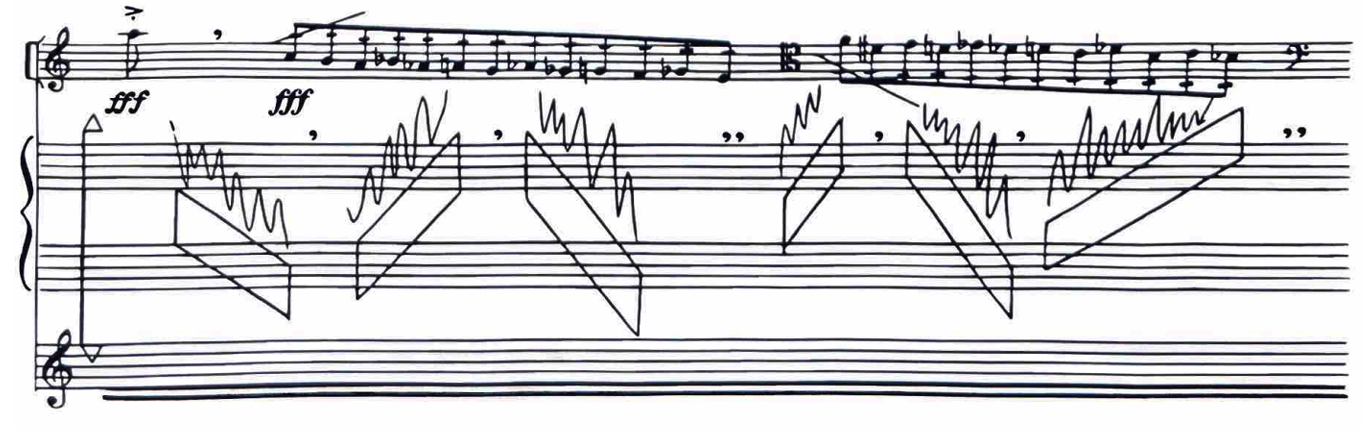
The symbol of the cross plays a central role in Sofia Gubaidulina's work. In her view, its horizontal bar symbolises our life in earthly time. The vertical bar stands for the connection of man with the divine, with a force that stands outside our time, which makes art in the true sense of the word possible in the first place, as it removes everything we do from the real world and raises it to a higher level. The cross is Sofia Gubaidulina's life principle, with which she interprets the world, which gives her life meaning and which gives her strength and comfort. Accordingly, the composer works with this symbol of the cross in many different ways. In her double concerto ‘Seven Words’ for violoncello and bayan, for example - probably Gubaidulina's most frequently performed work - she arranges the notes in the score at a central point in such a way that they form the shape of a cross. The string instruments also embody the symbol of the cross, as their players draw their bows across the strings, crossing them. In the following work ‘In croce’ from 1979, the cross is already mentioned in the title, albeit in Italian. But what is even more important: both instruments begin in opposite registers - the [organ] very high, the [cello] very low -, cross each other in the course of the work and end in the register of the other instrument - i.e. the [organ] very low and the [cello] very high. At the point where the two instruments cross, there is a kind of explosion in the form of excited [cello] tremolos and [organ] clusters.
–Hans-Ulrich Duffek
