The Edge of the Abyss Night 1
Gubaidulina Panel Discussion and Community Jam
August 28, 2026
6:00 PM: Panel Discussion
Yoshi Weinberg, moderator
Jules Biber, Lucy Shelton, Susan Botti, panelists
Aus den Visionen der Hildegard von Bingen
Lucy Shelton, soprano
Cello Preludes No. 1 and 2
Jules Biber, cello
All works by Sofia Gubaidulina
8:00 PM: Community Jam, Improvisation
The scores we will be reading and improvising from for this evening were composed specifically for this event as a response to specific works by Sofia Gubaidulina. InfraSound’s Artistic Director Yoshi Weinberg asked the participating composers to write a one page text or graphic score that was inspired by or responds to one of Sofia Gubaidulina’s compositions. The following are the titles and composers (and which work they are responding to).
Program:
I’m here, so now what? (world premiere)
Stefanie Proulx
Inspired by Dots, Lines, and Zigzags (1976)
Der Wortwechsel/ The Conversation (world premiere)
Yoshi Weinberg
Inspired by Sonatina (1978)
Icarus Etude (world premiere)
Daniel Schreiner
Inspired by Introitus (1978)
The room as ocean (world premiere)
Madeline Hocking
Inspired by String Quartet no. 2 (2012)
BACH (world premiere)
Sam Zagnit
Inspired by So sei es (2013)
Good Bye, Dulina (world premiere)
Alex Ring Gray
After Sofia Gubaidulina and Tom Higgenson
Performed by members of the InfraCore, InfraMantle, and audience
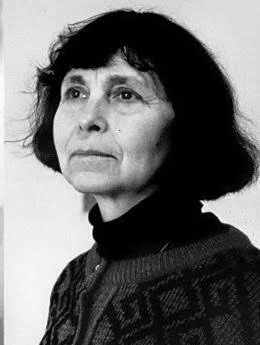
Sofia Asgatovna Gubaidulina was born in Chistopol during Stalin’s reign and graduated from the Kazan Conservatory in 1954, one year after Khrushchev assumed power. In 1959, partway through her continued studies of composition and piano at the Moscow Conservatory, she met Dmitri Shostakovich and played for him the symphony she had recently written as her final examination. Empathizing with the challenges posed by subverting the strict parameters of the Soviet-approved realism style, Shostakovich praised the young composer’s work and told her to “continue along your mistaken path.” Following his advice expectedly worsened the shadow of the Soviet authorities, which escalated dramatically after the end of Khrushchev’s Thaw in 1964. In 1979, the Union of Soviet Composers blacklisted her as one of the Khrennikov Seven for writing “noisy mud instead of musical innovation, unconnected with real life.” However, Gubaidulina took the denunciation in stride, enduring the poverty that arose from the subsequent lack of paying commissions in order to take advantage of the creative liberty it afforded her.
Gubaidulina’s Russian Orthodox faith pervades her work, but she qualifies her intentions: “I understand ‘religion’ in the literal meaning of the word, as ‘re-ligio’, that is to say the restoration of connections, the restoration of the ‘legato’ of life. There is no more serious task for music than this." The motif of simultaneous, bidirectional glissandi in two instruments often appears in her work, forming a sonic symbol of the cross with their opposing trajectories. As in Garden of Joys and Sorrows, the composer often employs unconventional techniques alongside spiritual themes to bolster the restoration of connections which she seeks. Many of these tendencies were inspired by experimentation in the mid-1970s with Astreia, her improvisatory folk ensemble.
Despite the best efforts of the Soviets, Gubaidulina has enjoyed a prominent and celebrated career. She garnered international attention through her violin concerto, Offertorium (1980) which was championed by Gidon Kremer. Her work Light of the End (2003) was given the honored program slot before Beethoven’s Ninth Symphony at the BBC Proms. Anne-Sophie Mutter and the London Symphony Orchestra recorded her second violin concerto In Tempus Praesens (2007) under Valery Gergiev. Her 80th birthday in 2011 was commemorated by many organizations worldwide, including a series of three weeklong Gubaidulina Festivals in Kasan, Hanover, and Moscow. During the festivities, the composer premiered her Percussion Concerto; her revised Bayan Concerto; A Pilgrimage of Four for violin, piano, bass, and percussion; and a work for twelve solo celli, Labyrinth.
–Josh Davidoff
–
In 1973, Sofia Gubaidulina was attacked and strangled in the elevator of her apartment building in Moscow. Luckily, she escaped by yelling “Why is it taking you so long to kill me?” and scaring her attacker. Her friends later theorized the attacker was a KGB agent. Following the fall of the USSR, she lived in Appen, Germany, from 1992. The Steinway grand piano in her home was a gift from Rostropovich. She married three times; her second husband was writer and dissident Nikolai Bokov. Gubaidulina briefly stopped composing in 2012 after the deaths of her third husband Pyotr Meshchaninov, her daughter, and her friend and fellow composer Viktor Suslin.
Sofia Asgatovna Gubaidulina passed away peacefully in her home on March 13th, 2025 in Appen, Germany at the age of 93.
–
InfraSound has always represented the voices of the marginalized, especially in the face of oppression and censorship. Although Gubaidulina saw music as an escape from the socio-political atmosphere of Soviet Russia, we view Sofia’s work as a vital representation of music as protest and as resistance. She associated music with human transcendence and mystical spiritualism which manifests itself as a longing inside the human soul to locate its true being, a longing she continually tried to capture in her works. Her ability to survive and create despite her circumstances are signals of the necessity of art as a form of survival under oppression. We perform these concerts in her honor.
–Yoshi Weinberg, Artistic Director of InfraSound
Meet the Panelists
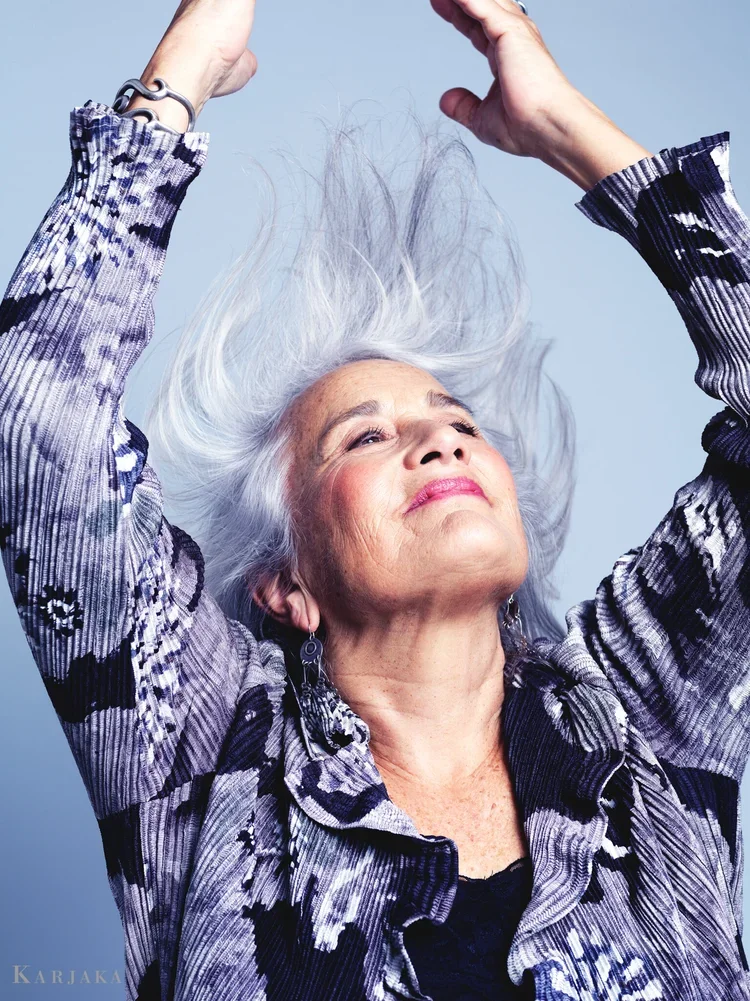
Lucy Shelton
The only winner of two Walter W. Naumburg Awards—for both chamber music and solo singing—soprano Lucy Shelton is an internationally recognized exponent of 20th- and 21st-Century repertory, having premiered over 100 works by many of today’s preeminent composers. Notable among these are Carter’s Tempo e Tempi and Of Challenge and Of Love, Knussen’s Whitman Settings, Schwantner’s Magabunda and Sparrows and Albert’s Flower of the Mountain. She premiered Grisey’s L’Icone Paradoxiale with the Los Angeles Philharmonic; sang Boulez’s Le Visage Nuptial under the composer’s direction in Los Angeles, Chicago, London, and Paris; performed Kurtag’s The Sayings of Peter Bornemisza with pianist Schiff in Vienna, Berlin, and London; and made her Aldeburgh Festival debut in the premiere of Goehr’s Sing, Ariel. Ms. Shelton has exhibited special skill in dramatic works, including Berio’s Passaggio with the Ensemble InterContemporain, Tippett’s The Midsummer Marriage (for Thames Television), Dallapiccola’s Il Prigioniero (her BBC Proms debut), and Rands’ Canti Lunatici.
Lucy Shelton recently made her grand opera debut in the role of The Teacher composed specifically for her by Kaija Saariaho in her final opera Innocence. It premiered in 2021 with performances in Aix-en-Provence followed by productions in Helsinki, London, Amsterdam, San Francisco, the Adelaide Festival, and at the Metropolitan Opera. She will reprise the role in Paris in 2027.
Another recent role created for her is the lead character in Lucidity, a chamber opera by Laura Kaminsky. Exploring the interplay between memory and music, this work sensitively explores the challenges of aging and dementia.
In 2023 she was the recipient of Chamber Music America’s Bogomolny National Service Award for her “superb artistry and contributions as educator and mentor to an upcoming generation of contemporary chamber musicians”.
A native of California, Shelton’s primary mentor was the legendary American mezzo-soprano Jan de Gaetani, whose integrity and intensity in music-making continue to be an inspiration.
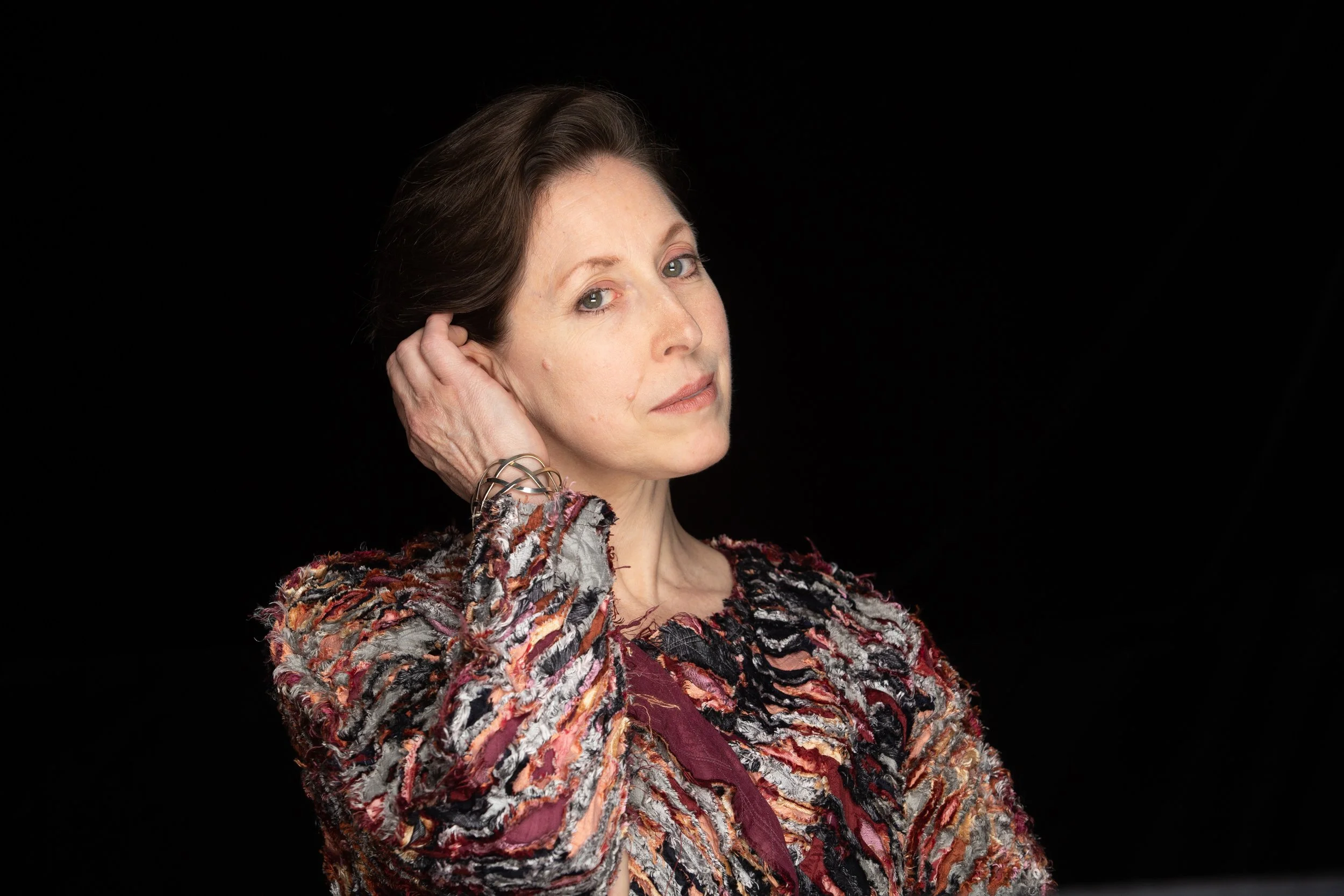
Susan Botti
Composer/Performer, Susan Botti's “striking, emotional music” (Opera Magazine) encompasses traditional, improvisational, and non-classical composition and singing styles, with theater and the visual arts playing a formative role in the practice and aesthetic of her work. Botti is the recipient of numerous awards, including: a Guggenheim Fellowship, The Rome Prize, and the Goddard Lieberson Fellowship from the American Academy of Arts and Letters; grants and commissions from the National Endowment for the Arts, the Aaron Copland Fund, the Fromm Foundation, the Foundation for Contemporary Performance Arts, Chamber Music America, NY Foundation for the Arts, NY State Council on the Arts, and ASCAP. She was the third Daniel R. Lewis Young Composer Fellow with the Cleveland Orchestra. In many cases, she is the vocal soloist as well as composer of her works. Often, her projects evolve from artistic collaborations including: Christopher Lamb, percussionist, with the NY Philharmonic (EchoTempo); Martha Caplin, violinist, with the Orpheus Chamber Orchestra (Within Darkness); the chamber ensemble, InfraSound (Iconic); soprano, Lucy Shelton (Bird Songs); the poets from the Dream Project - writing for resilience (Dreamer Songs); the poet Linda Gregerson (Dido Refuses to Speak); and theater designer, Leslie Taylor (multiple projects).
In addition to performing her own vocal works, Botti specializes in the performance of contemporary music of diverse styles. She has worked directly with many composers and continues to commission new works for her voice and violin duo, Duo della Luna (with violinist Airi Yoshioka). For over a decade, composer/conductor Tan Dun created major works highlighting her vocal and theatrical talents, including the role of "Water" in his opera, Marco Polo, and the vocal solo in his multimedia work for soprano and orchestra, Orchestral Theatre III: Red Forecast.
Susan Botti is a member of the Composition Faculty at the Manhattan School of Music.
www.susanbotti.com
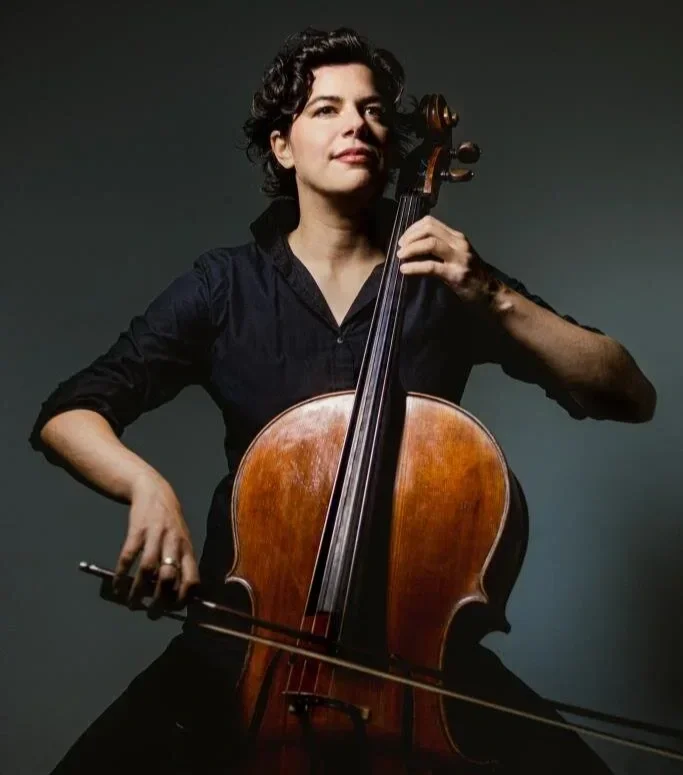
Jules Biber
Jules Biber is a cellist, educator and musical curator based in Brooklyn, NY. An accomplished chamber musician and soloist, Jules’ versatility in early, standard and modern repertoire, as well as non-classical styles, makes her sought-after for a variety of high-profile concerts and recording projects, and her deep commitment to inclusive community has made her one of the city’s progressive curators of classical music spaces.
In 2019, Jules co-founded ChamberQUEER, an LGBTQ+ chamber music organization devoted to presenting and performing queer composers and musicians and highlighting historical queer figures in classical music. Based in Brooklyn, NY, it is in its third season of events serving the greater NYC community by creating an alternative, inclusive space within the classical music scene, supported in part by the Brooklyn Arts Fund and New Music USA. It has received write-ups in the New Yorker and New Music Box, and been presented by Death of Classical, WQXR at the Greene Space, Boulanger Initiative, and Brooklyn Pride.
Jules has participated in music festivals at Kneisel Hall, Taos School of Music, Tanglewood and Banff Centre. Primary teachers have included Richard Aaron at the Cleveland Institute of Music, Barbara Stein-Mallow at the Mannes College of Music, Julia Lichten at Purchase College and Marcy Rosen at the Graduate Center at CUNY. Jules received her DMA from the CUNY Graduate Center, where her dissertation, published in 2016, focused on the 10 Etudes for Solo Cello by Sofia Gubaidulina. She currently serves on the music faculty at Hunter College.
